
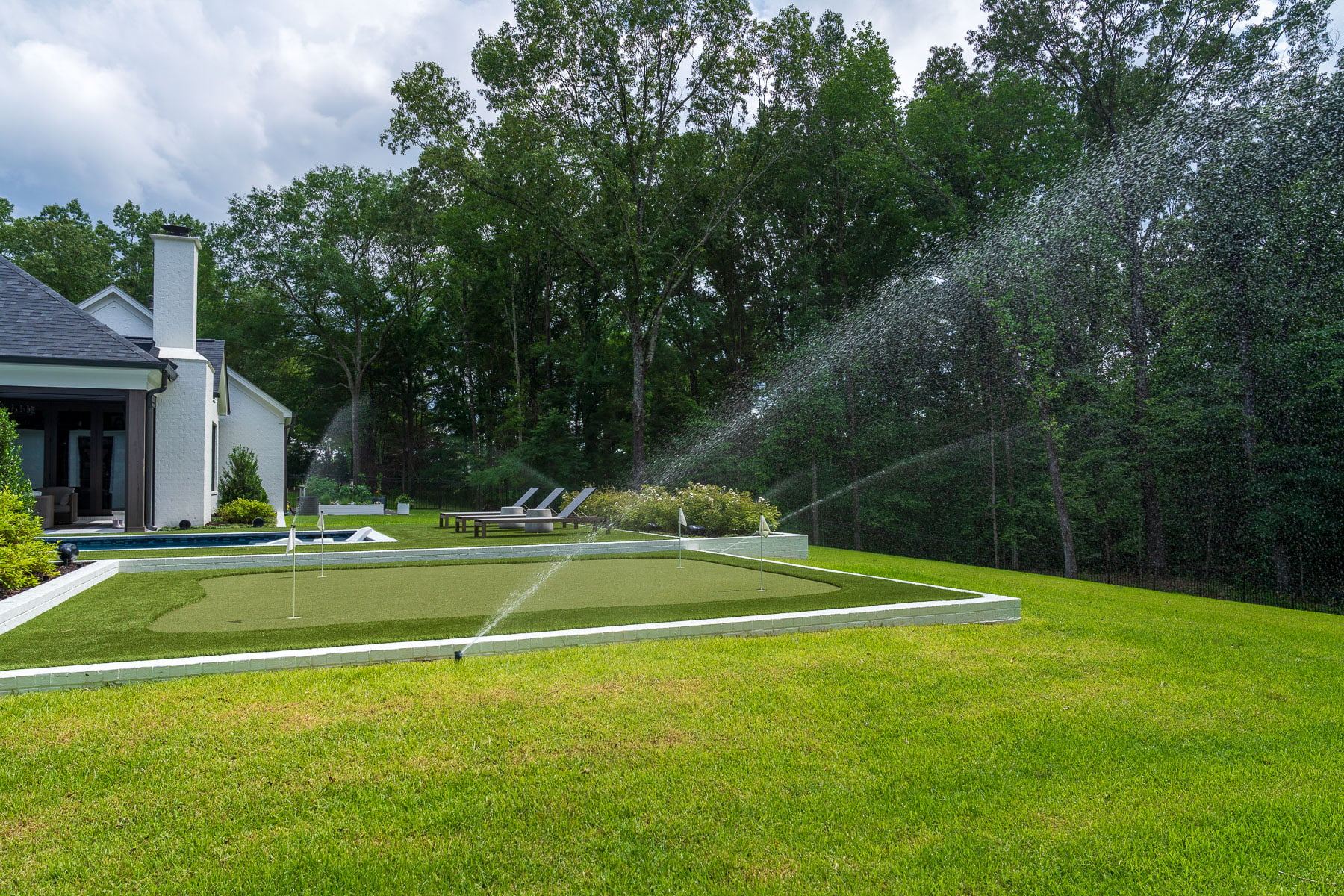
Rotors watering a golf fairway under a blue sky
DFW · Irrigation & drainage

Right water.
Right place.
Right amount.

We map your zones, do the math on every valve and emitter, and tune your system so North Texas soil stays near 30% moisture. No mowing crews, no upsell. Just water done right.

10+ years in DFWHomes, HOAs & developersTwo full-time crewsAll major brands
Sound familiar?

Problems we fix every week

Brown spotsDry patches while the rest of the lawn is green
Soggy areasSquishy turf, mushrooms, mosquitoes
Water on the sidewalkOverspray, runoff and misaligned heads
Bill went upA leak, a stuck valve or a bad schedule
Standing water after rainPoor grading, clogged downspouts, no drain path
Confusing controllerNobody knows what runs when, or why
Zone map out of dateBeds and turf changed, but the zones never did
Weak or misting headsLow pressure, heads barely pop up, spray turns to fog
Services

Everything that moves water across your property

Every job starts with the same question: where is the water actually going? In North Texas clay, that answer is often "running off the surface" or "sitting in one low spot."

Rotors watering a backyard lawn beside a putting green

Evaluation & zone mapping

We run every zone, check pressure and coverage, probe the soil to see where clay is staying too wet or too dry, and leave you a map of what waters where.

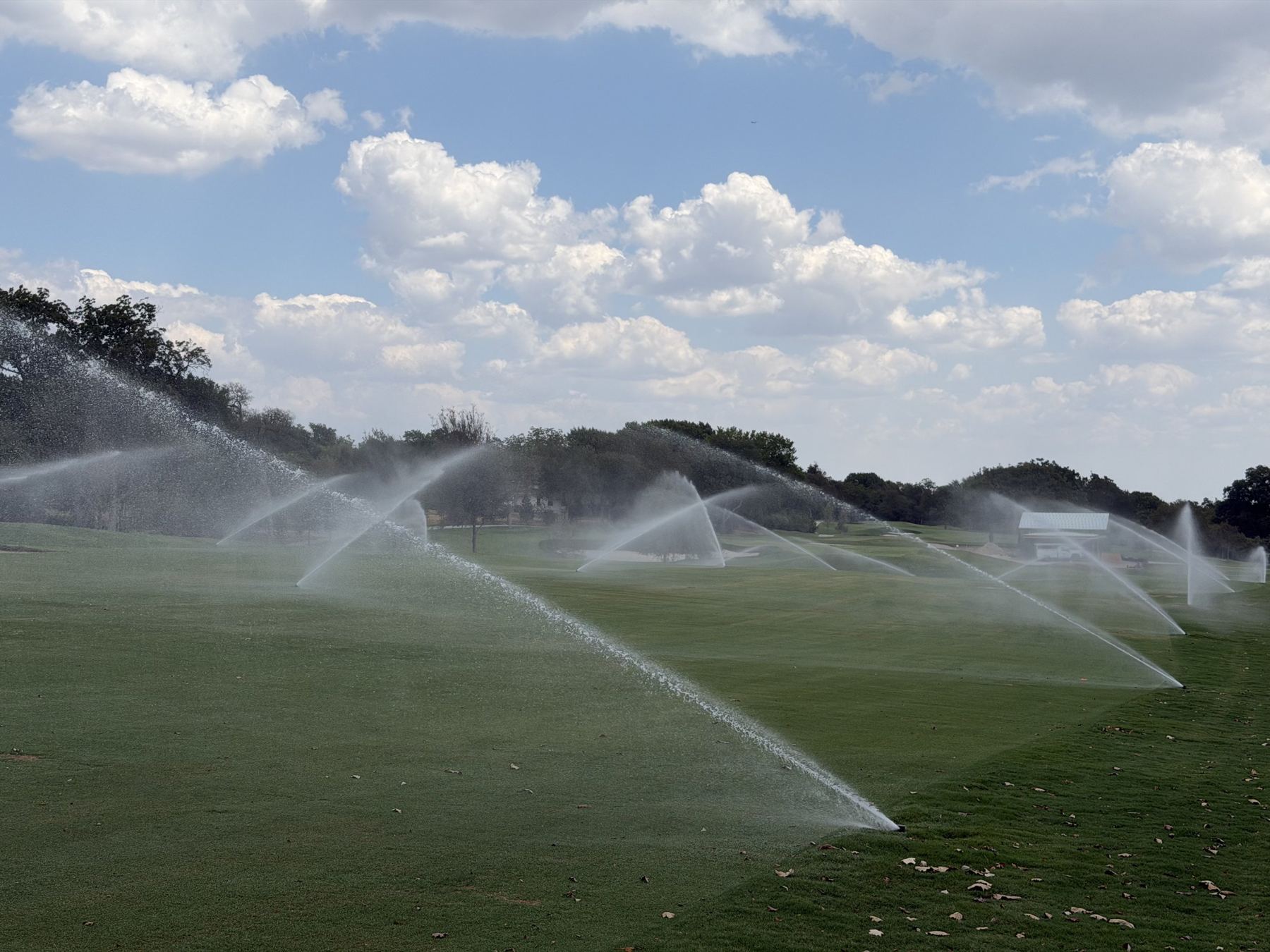
Close-up of a rotor head spraying in the grass

Repair & diagnostics

Broken heads, leaking valves, dead zones, wiring faults and solenoids that won't open. Clay shrinks and swells with the seasons, which cracks fittings and tilts heads, so we check for that too.
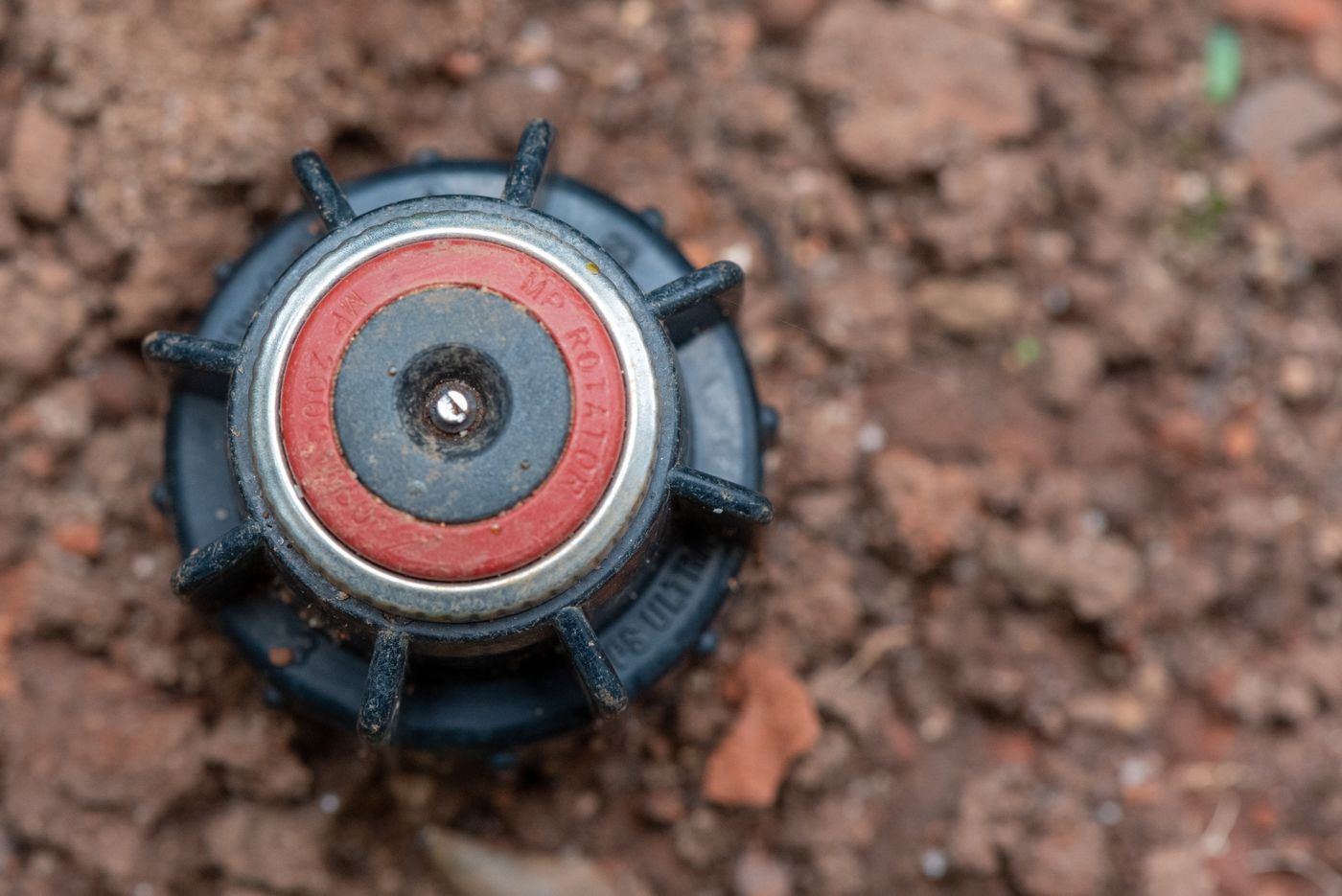
New sprinkler head set in bare soil

Design & new installs

Systems sized to your water supply: GPM per zone, head spacing for head-to-head coverage, added zones, and low-rate nozzles that put water down no faster than clay can absorb it.

Drip tubing running along rows of plants

Drip irrigation

Emitters sized in gallons per hour to each plant, so beds and trees get water at the roots, not the mulch. Slow drip suits clay, which soaks it in steadily instead of shedding it.
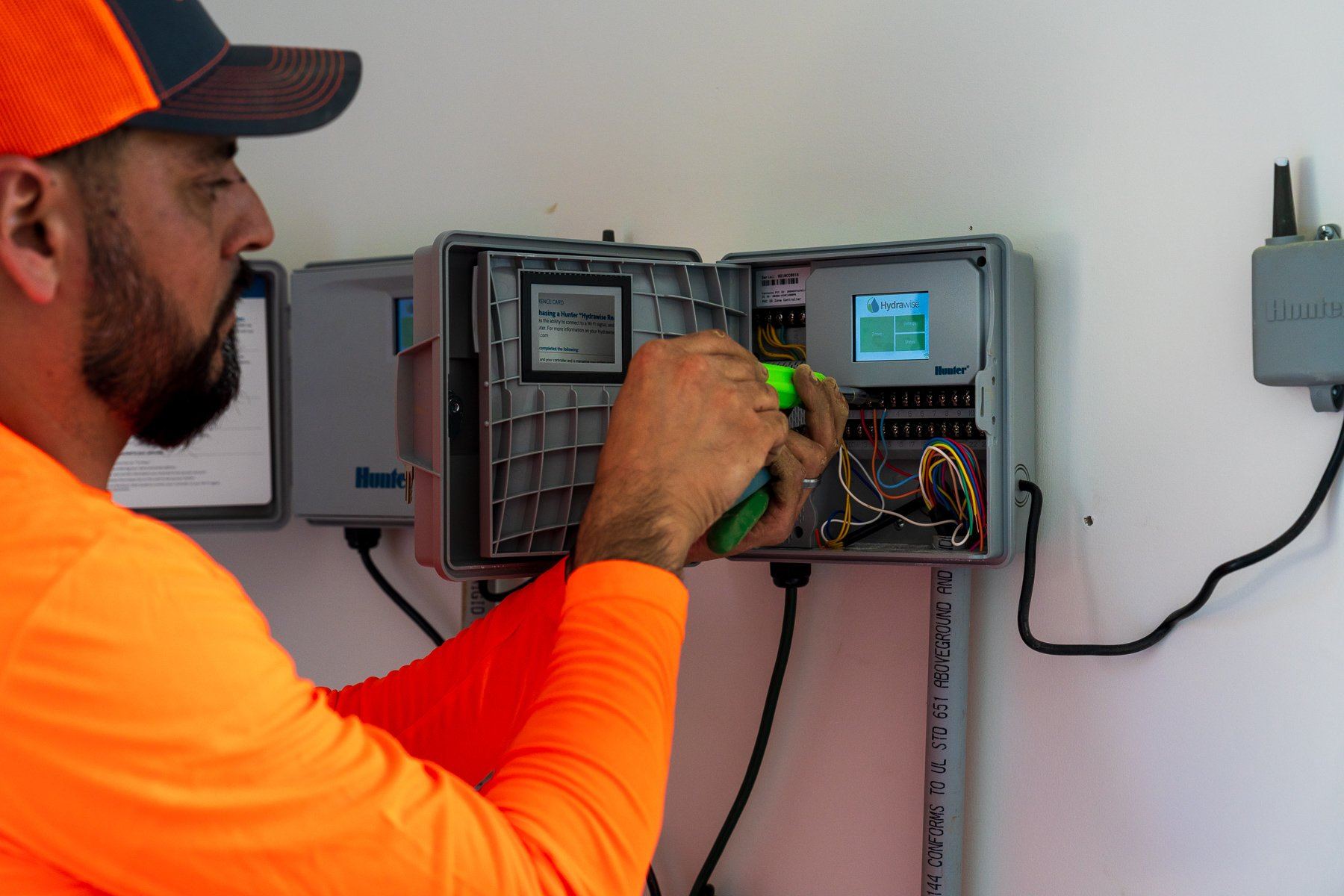
Technician wiring a smart irrigation controller

Smart controllers & monitoring

Rachio, Hunter Hydrawise and Rain Bird setup, weather-based scheduling, flow meters for leak alerts and remote monitoring, with cycle-and-soak programs set for clay so nothing runs into the street.

Wet grass blades in early light

Drainage

French drains, downspout extensions, pop-up emitters and regrading that move water away from the house. Clay drains slowly, so standing water needs a path out, not just more time.
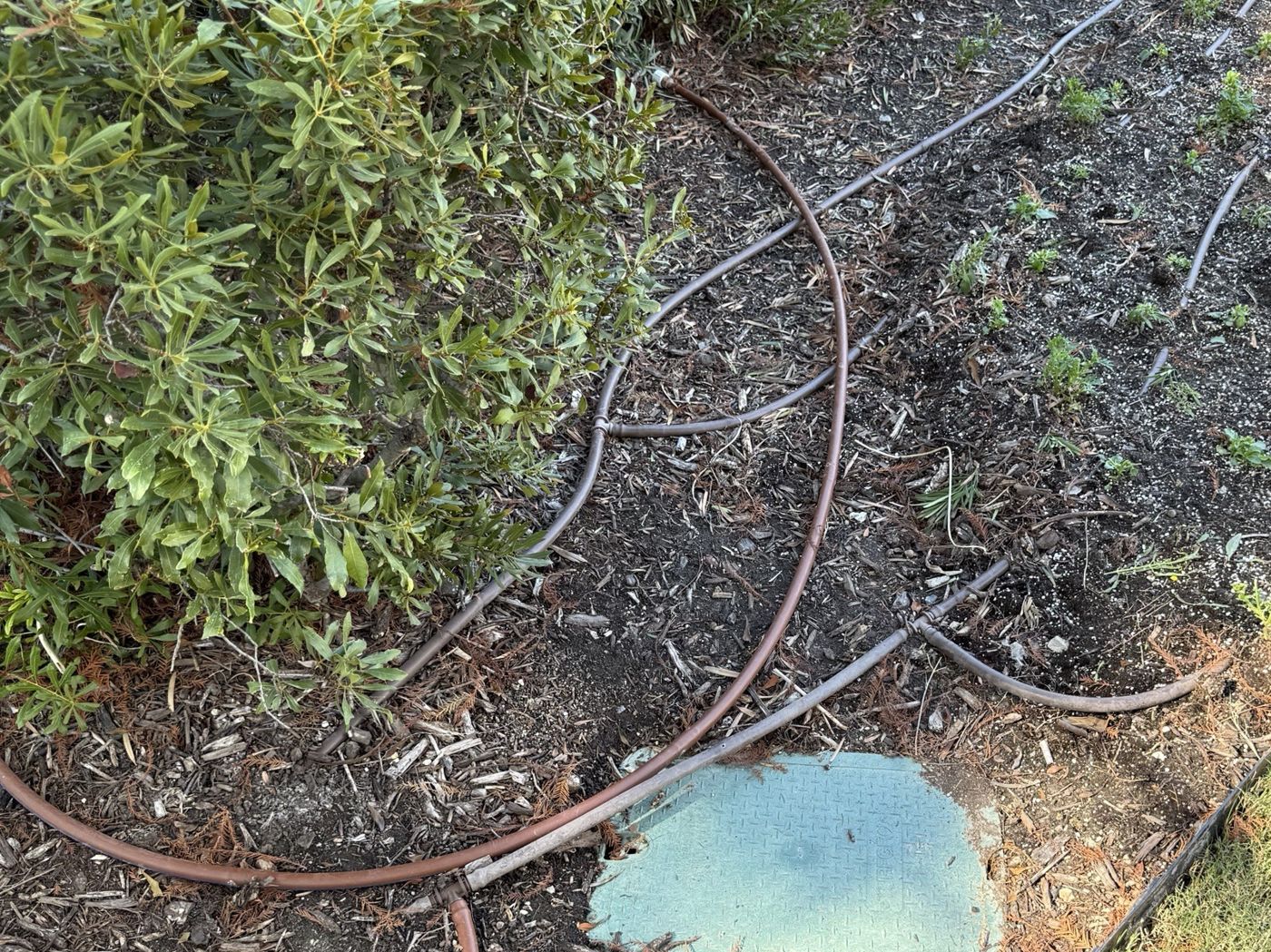

Before: loose drip lines crossing a bed and a valve box lid buried in mulch After: drip line laid straight along the planting row BeforeAfter
Before / after

From tangled to tuned

Drip lines added one patch at a time end up crossing beds, watering mulch and hiding the valve box, while the clay under some plants stays soggy and others go dry. We straighten it out.

  • Tubing re-run along each planting row and staked down
  • Emitter count and flow matched to each plant's size and water need
  • Valve box cleared, set to grade and labeled by zone
  • Run times recalculated for the new layout
How we water

We do the math

Clay soil holds water but takes it in slowly. Water too fast and it runs off; water too often and roots stay shallow. We aim for about 30% soil moisture and set each zone to hold it there.

  1. Measure flowGallons per minute at each zone, and gallons per hour at each drip emitter.
  2. Find the application rateHow many inches per hour each zone actually puts down, from head count, nozzles and area.
  3. Size the needGallons needed for the area, the grass or plants, sun or shade, and the season.
  4. Set frequency and durationCycle-and-soak run times so clay absorbs it all, within your city's watering-day rules.
  5. Monitor and adjustCheck moisture and coverage, then fine-tune through the season.
Example · one spray zone, one drip zone

Spray zone

1,500 sq ft of St. Augustine
Flow
24 GPM, measured at the zone
Rate
96.25 × 24 ÷ 1,500 = 1.54 in/hr
Water needed
0.5 in × 1,500 × 0.623 = 467 gal
Run time
0.5 ÷ 1.54 × 60 = 19.5 min
On clay
4 cycles of 5 min, an hour apart

Drip zone

Bed of 20 shrubs
Flow
20 shrubs × two 1 GPH emitters = 40 GPH
Rate
Emitter count and GPH set by plant size
Water needed
2 gal per shrub
Run time
2 gal ÷ 2 GPH = 1 hr
On clay
One slow run; drip already suits clay

Illustrative numbers for one zone; real figures come from measuring each zone on site. One inch of water over one square foot is 0.623 gallons, and 96.25 converts gallons per minute over square feet into inches per hour. Spray heads typically apply about 1.5–2 in/hr, rotors and rotary nozzles about 0.4–1 in/hr.

Large-scale & commercial

Built for developers, builders and HOAs

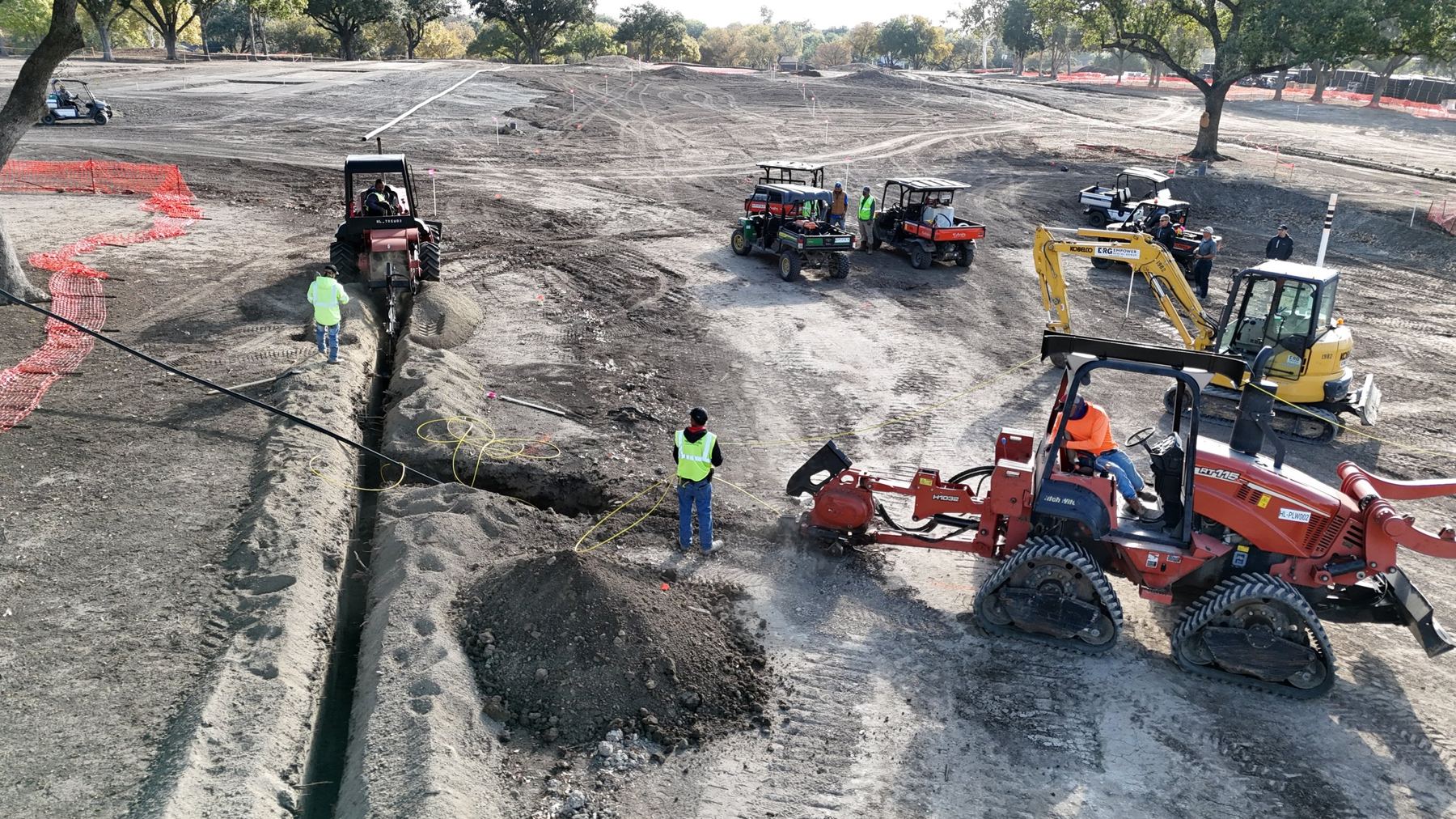
King Ridge runs two full-time crews, so we can take on a new-development install and still keep up with recurring maintenance across whole communities. Whether it's mainline across a golf course renovation or hundreds of zones in an HOA's common areas, we plan the water the same way: by the numbers, for North Texas soils.
  • Developers
  • Home builders
  • HOAs & property managers
  • Commercial sites
  • Golf & athletic fields
Crew trenching irrigation mainline across a golf course renovation

Installation

  • New subdivisions, entries and common areas
  • Commercial sites and campuses
  • Golf course and athletic field renovations
  • Mainline, valves, wire and controllers from plans or design-build

Maintenance

  • Scheduled inspections and wet checks
  • Fast repair response for property managers
  • Seasonal schedule changes and controller monitoring
  • Zone maps and reports for boards and owners
Grass types

Every lawn drinks differently

The three warm-season grasses we see most across DFW each want a different schedule.
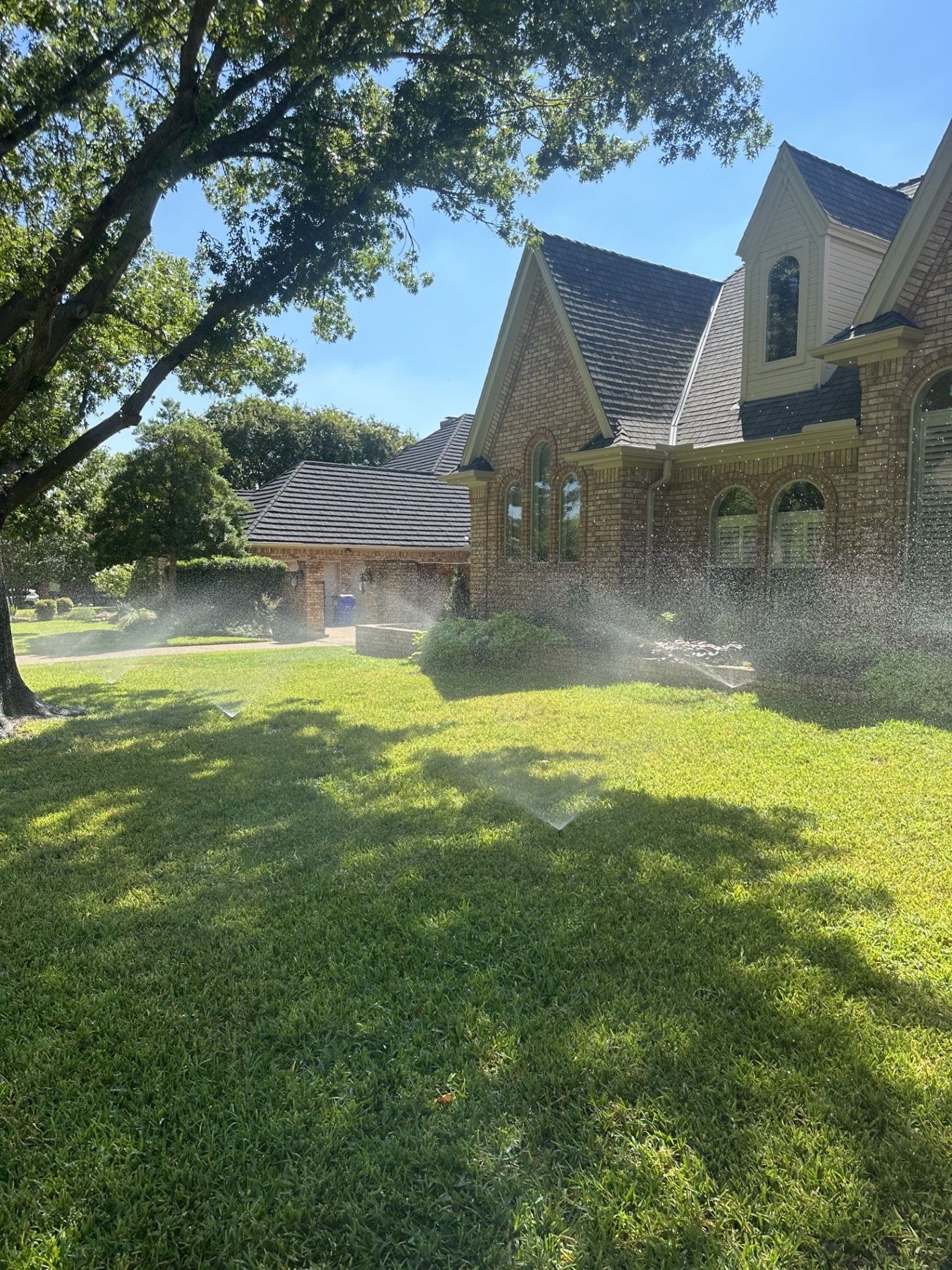
Spray heads watering a St. Augustine lawn in front of a brick home

St. Augustine

Broad blades and good shade tolerance, but thirsty in full sun. Its shallow roots dry out fast once the clay surface cracks.

Water
Higher need
Watch for
Dry spots at spray edges
Bermuda fairway and green beside a pond under a blue sky

Bermuda

Fine, tough and drought tolerant. On clay it needs less than most people give it, and extra water just runs off.

Water
Lower need
Watch for
Overwatering and runoff
Zoysia lawn in Plano, Texas

Zoysia

Dense and soft underfoot. Thick thatch over clay holds water near the surface, so slow, deep watering works best.

Water
Moderate need
Watch for
Fungus from short runs
Inside the system

Every part, from the meter to the nozzle

Water follows the same path through every system. When something goes wrong, we trace it in order, and when we install, every piece is chosen to match the one before it.

  1. Point of connectionWhere the irrigation system ties into the water supply, usually right after the meter, with a shutoff valve so the system can be isolated from the house.
  2. Backflow preventerKeeps irrigation water from flowing back into your drinking water. Texas requires one; the type (pressure vacuum breaker, double check or reduced-pressure assembly) depends on the site, and it's tested by a licensed tester.
  3. MainlineThe pipe from the backflow to the zone valves. It's under pressure all the time, so we use heavier pipe, typically Schedule 40 PVC, and Class 315 for larger commercial lines.
  4. SleevesLarger PVC pipe laid under driveways, sidewalks and walls so mainline, laterals and wire can cross later without breaking concrete. They extend past the edge of the paving on both sides.
  5. Valves & manifolds24-volt solenoid zone valves grouped in valve boxes, plus isolation (ball) valves to shut off part of a system and master valves that close the mainline when nothing is supposed to run.
  6. Lateral linesThe pipe after each zone valve, pressurized only while that zone runs. Usually Class 200 PVC, with flexible swing pipe up to each head so mowers and settling clay don't snap fittings.
  7. Heads & nozzlesSpray heads for small areas, rotors for large turf, and rotary nozzles that put water down slowly enough for clay. Pressure-regulated bodies keep the spray from misting, and check valves stop the low heads from draining the line and puddling after a zone shuts off.
  8. Drip zonesA filter and pressure regulator at the valve, then emitter tubing or individual emitters sized in gallons per hour for each bed and tree.
  9. Wire, controller & sensorsDirect-burial wire with waterproof connectors, or two-wire decoder systems on large sites, back to a controller with rain, freeze, soil-moisture and flow sensors.

Balanced systems

A balanced system puts the same amount of water everywhere a zone runs. That means matched precipitation rates (no sprays and rotors on the same zone), head-to-head coverage, the right pressure at every head, and zones sized to what your water supply can actually deliver. Unbalanced zones are the usual reason one corner is brown while another is soggy.

Remote monitoring & leak detection

Yes, it exists, and it works. A flow meter on the mainline lets a smart controller compare what each zone should use with what it actually uses. It can alert us to a broken head or a stuck valve, flag water moving when nothing is scheduled, and on many systems close the master valve automatically. For HOAs and commercial sites, we can watch every controller from one dashboard.

Freeze protection & winterization

North Texas doesn't freeze often, but when it does, exposed pipe and the backflow preventer are what break. Before a hard freeze we shut the system off at the backflow, drain the above-ground parts and insulate them, then handle the spring start-up. Most Texas systems aren't built for a northern-style air blowout, so we only do that where the design calls for it.
Brands we install and service

Brand names are trademarks of their owners. King Ridge is independent and not affiliated with any manufacturer.

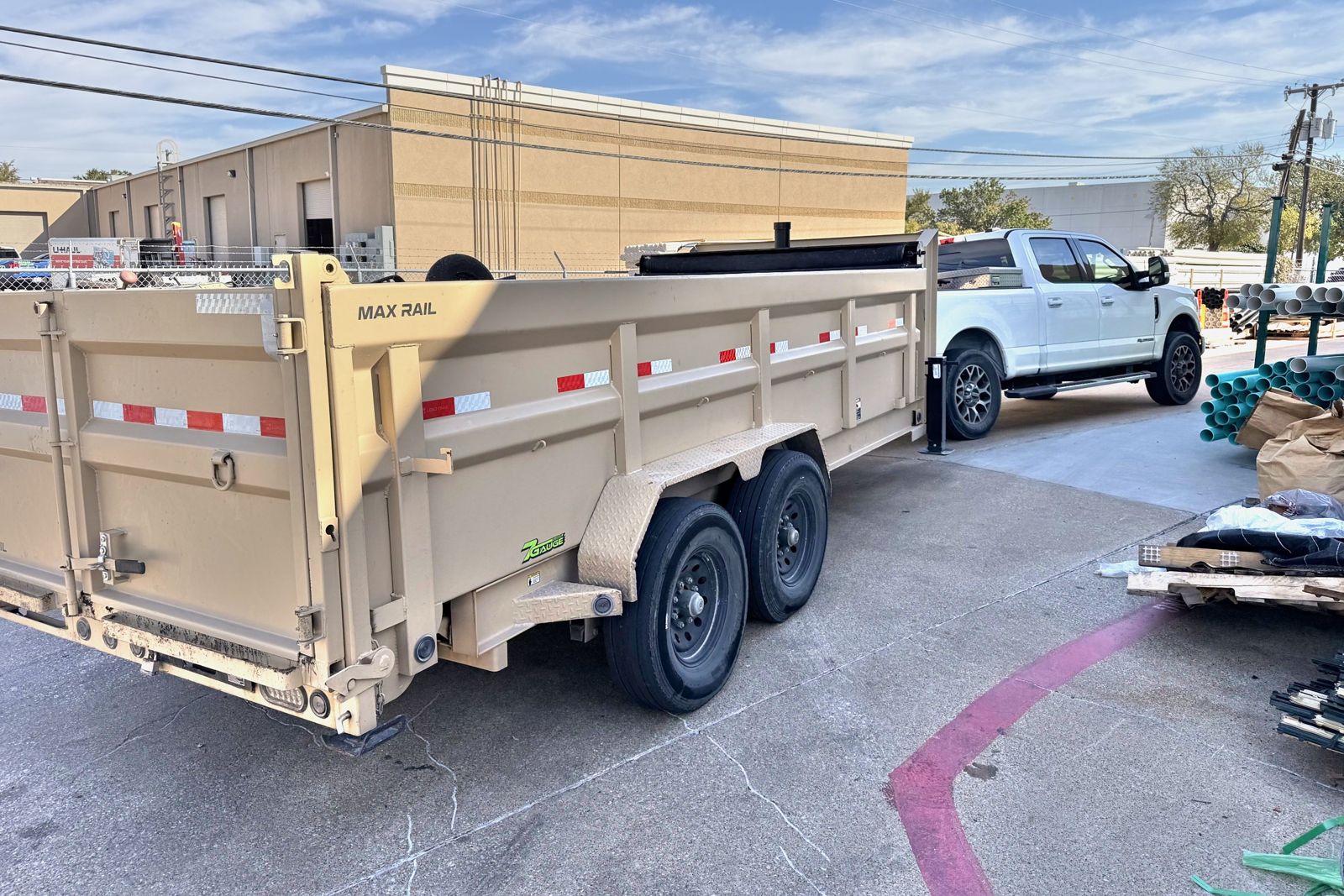
King Ridge truck and dump trailer at a pipe supply yard
Our truck and trailer loading up at the supply yard.
About King Ridge

Family owned. Focused on water.

King Ridge is family owned and operated, built on a North Texas legacy in landscaping excellence. Today we put that experience into the part of the landscape most companies get wrong: the water. We don't mow, edge or plant. For more than ten years we've worked only on the water side of the yard: irrigation and drainage across Dallas–Fort Worth, for homeowners, developers, builders, HOAs and commercial properties. Two full-time crews mean we can staff a large install without letting maintenance customers wait.

10+Years in the trade
DFWMetroplex service area
2Full-time crews
Collin County

Allen · Anna · Blue Ridge · Celina · Fairview · Farmersville · Frisco · Josephine · Lavon · Lowry Crossing · Lucas · McKinney · Melissa · Murphy · Nevada · New Hope · Parker · Plano · Princeton · Prosper · Richardson · St. Paul · Weston · Wylie

Richardson & Garland area

Addison · Carrollton · Dallas · Farmers Branch · Garland · Heath · Mesquite · Rockwall · Rowlett · Royse City · Sachse · Sunnyvale

Across DFW

Arlington · Flower Mound · Fort Worth · Grapevine · Irving · Lewisville · Little Elm · Southlake